By Adam Joseph Reed
I am writing this blog to explain
and describe the use of contracts in the media industry to NCTV and advice upon
the use of them in their productions. A contract in business terms is an
agreement that is signed by someone to show they agree with the statement. The
statement is enforceable by law if the signer goes back on his terms.
 There are many different types of contracts. Some of agreements listed on
a contract will refer to confidentially. Something being confidential means
when you sign the contract you are not allowed to refer to certain parts of the
production outside of your working hours. An example of this is on the BBC One
TV show Doctor Who. 2013 posed the 50th year anniversary of the
British sci-fi series. As part of the large campaign to advertise and promote
the 50th anniversary a 7 minute long webisode (an online exclusive
episode) starring Paul McGann as the 8th Doctor set to be aired
online on Friday 15th of November. The episode, only featuring a
small number of cast members and sets was filmed in secrecy, with all the
people who knew about it bound to keep their mouth shut by their contract, to
not spoil the surprise of McGann’s return. Unfortunately someone did not keep
to their signed agreement, as a few pictures of the set and new costume were
spewed online, detailing the fact that such a mini episode existed and hosted
the return of a past Doctor. This development forced the BBC’s hand to release
the episode online a day earlier than scheduled, on Thursday 14th of
November. In an interview with Paul he stated “keeping it a secret was the hard
thing and what was quite disappointing was particularly the last few days
seeing it getting leaked, gradually leaked onto the internet in stills and
photographs.” http://www.youtube.com/watch?v=AUq1L1Q4Pfg. The person who posted the
photos was fired from the BBC for violating the terms of his agreement. NCTV
should take note of this as it shows that it is important for its members to
sign for confidentiality agreement if a production is to be kept secretive,
without spoilers leaking into Newspapers and articles online.
There are many different types of contracts. Some of agreements listed on
a contract will refer to confidentially. Something being confidential means
when you sign the contract you are not allowed to refer to certain parts of the
production outside of your working hours. An example of this is on the BBC One
TV show Doctor Who. 2013 posed the 50th year anniversary of the
British sci-fi series. As part of the large campaign to advertise and promote
the 50th anniversary a 7 minute long webisode (an online exclusive
episode) starring Paul McGann as the 8th Doctor set to be aired
online on Friday 15th of November. The episode, only featuring a
small number of cast members and sets was filmed in secrecy, with all the
people who knew about it bound to keep their mouth shut by their contract, to
not spoil the surprise of McGann’s return. Unfortunately someone did not keep
to their signed agreement, as a few pictures of the set and new costume were
spewed online, detailing the fact that such a mini episode existed and hosted
the return of a past Doctor. This development forced the BBC’s hand to release
the episode online a day earlier than scheduled, on Thursday 14th of
November. In an interview with Paul he stated “keeping it a secret was the hard
thing and what was quite disappointing was particularly the last few days
seeing it getting leaked, gradually leaked onto the internet in stills and
photographs.” http://www.youtube.com/watch?v=AUq1L1Q4Pfg. The person who posted the
photos was fired from the BBC for violating the terms of his agreement. NCTV
should take note of this as it shows that it is important for its members to
sign for confidentiality agreement if a production is to be kept secretive,
without spoilers leaking into Newspapers and articles online.

An
Exclusivity contract is where the rights are owned by a certain company and no
one else. For example the rights to the Halo game series are in the hands of
Microsoft alone. Meaning the games featuring Halo universe are only released
for the Microsoft gaming console, the Xbox. Exclusive contracts ensure that
only one company owns the rights to a franchise or even a person. I found an
article dated from 2008 that states the TV Chef Jamie Oliver signed a contract
that “will tie him exclusively to” Channel 4 “for the next two years.” http://www.telegraph.co.uk/news/celebritynews/3242731/Jamie-Oliver-signs-2-million-Channel-4-deal.html. This means the UK broadcaster
Channel 4 offered him “£2 million” so that he will only cameo/present shows
made and shown on their TV channel.
If
NCTV wanted to secure a certain talent or franchise to only appear on their
productions they would have to offer a sum of money and an exclusivity
contract.
When
hiring workers you have to take responsibility for any accidents they may have
whilst working for your company. Health and Safety is where certain precautions
to make sure people feel safe in the work environment. It is the employer’s
duty to ensure that the welfare of its employees is taken into account. It is
important for any company to invest in liability insurance so that if a worker
did injure themselves it can be shown in a court of law that you did take
precautions against what happened, and that the accident is in no way the
company’s fault. I would advise that NCTV looks into getting liability
insurance as, if it can be proved it was the company’s fault for an employee’s
injury in the workplace then they can be sued by the victim and loose a
considerable amount of money.
As
well as looking after the wellbeing of the employees, you must also make sure
they are not being discriminated against by other employees. Discrimination is the
act of bullying someone because of their characteristics alone (for example
sex, race, age, or religion). In 2006 on the 1st of October the Employment
Equality (Age) Regulations 2006 was passed in the UK to prohibit “employers
unreasonably discriminating against employees on grounds of age” http://en.wikipedia.org/wiki/Employment_Equality_(Age)_Regulations_2006 by making the act of
discrimination illegal in the work place.
If NCTV would be interested in using an already established
show/character in one of their productions they would have to look into purchasing
the rights to it. Copyright is a legal ownership of the rights to use/distribute
something. These rights are mostly in the hands of the original creator of the
piece, for example “the photographer of a photograph or the author of a book” http://en.wikipedia.org/wiki/Copyright.Thi s legal concept is in
place to make sure properties that the creator owns are not used by anyone else
without the authorization of the owner.
Something
very similar to copyright is a trademark, as it is legally owned by a party. A
trademark is a logo or symbol that is legally registered by a corporation to
represent them. All logos that are classed as a trademark have a small font
size R in a circle or TM next to the logo. The R means registered trademark.
The small symbols are there to show that the logo has a corporate owner so
cannot be used by anyone else without permission.
When
working on a factual production about a person or group of people it is very
important to paint portray them in a fair light. What this means is, say if
NCTV was producing a show detailing peoples religious beliefs. Even if the crew
working on the production do not believe in the same beliefs as the subject of
the documentary they must not deny the religion or disrespect it. You must represent
them well. To make sure you are not portraying them in a completely bad light.
An example of this is the 30 minute BBC Panorama special ‘North Korea
Undercover’ http://www.bbc.co.uk/iplayer/episode/b01s1mfw/Panorama_North_Korea_Undercover/. The special features a
group of people going into North Korea under cover to film the state of the
country. Despite the fact of going to a country with false identification being
illegal, the BBC were allowed to get away with it as at the time North Korea
was in the public interest and a social concern, as there was a looming threat
of a nuclear war breaking out. Even if you agree that North Korea is a horrible
place, you must admit the documentary does misrepresent it. A case of this is
the creepy atmospheric soundtrack that underlies most of the production. This
soundtrack immediately gives the impression that North Korea is bad. Whilst it
may be true that North Korea is a scary place, it is not ethically sound to add
a spooky score to glaze the 30 minute factual piece.
The
BBC when making shows follows the Code of Practice. According to the BBC
website http://www.bbc.co.uk/commissioning/tv/how-we-work/business-requirements/code-of-practice.shtml
the code “sets out the
principles which are to be applied when the BBC is, for a purpose connected
with the provision of Public Television services, agreeing terms for the
commissioning of independent productions.”. The Code is on place to make sure
serious topics are handled in a professional and respectful manner. It
prohibits “the use of profanity, the negative portrayal of family life,
irreverence for God and religion, illicit sex, drunkenness and addiction,
presentation of cruelty, detailed techniques of crime, the use of horror for
its own sake, and the negative portrayal of law enforcement officials” http://en.wikipedia.org/wiki/Code_of_Practices_for_Television_Broadcasters.
 We must make sure that NCTV
stays within the law. For this we must abide by the legislations put into
motion. Such as the Race Relations Act of 1976. This was created to stop the discrimination
of employees because of their race. Obscene Publications Act of 1959 was put into motion to ban the showing
of certain actions or imagery judged as being obscene, on TV and film. An
example of this act in motion is the video nasty list of early 80’s. This
motion, led by Mary Whitehouse, prosecuted films that were deemed by them to be
influencing people to commit murder and other crimes, making such films as ‘Evilspeak’
and ‘The Driller Killer’ banned in the UK. Most of the films put on trial
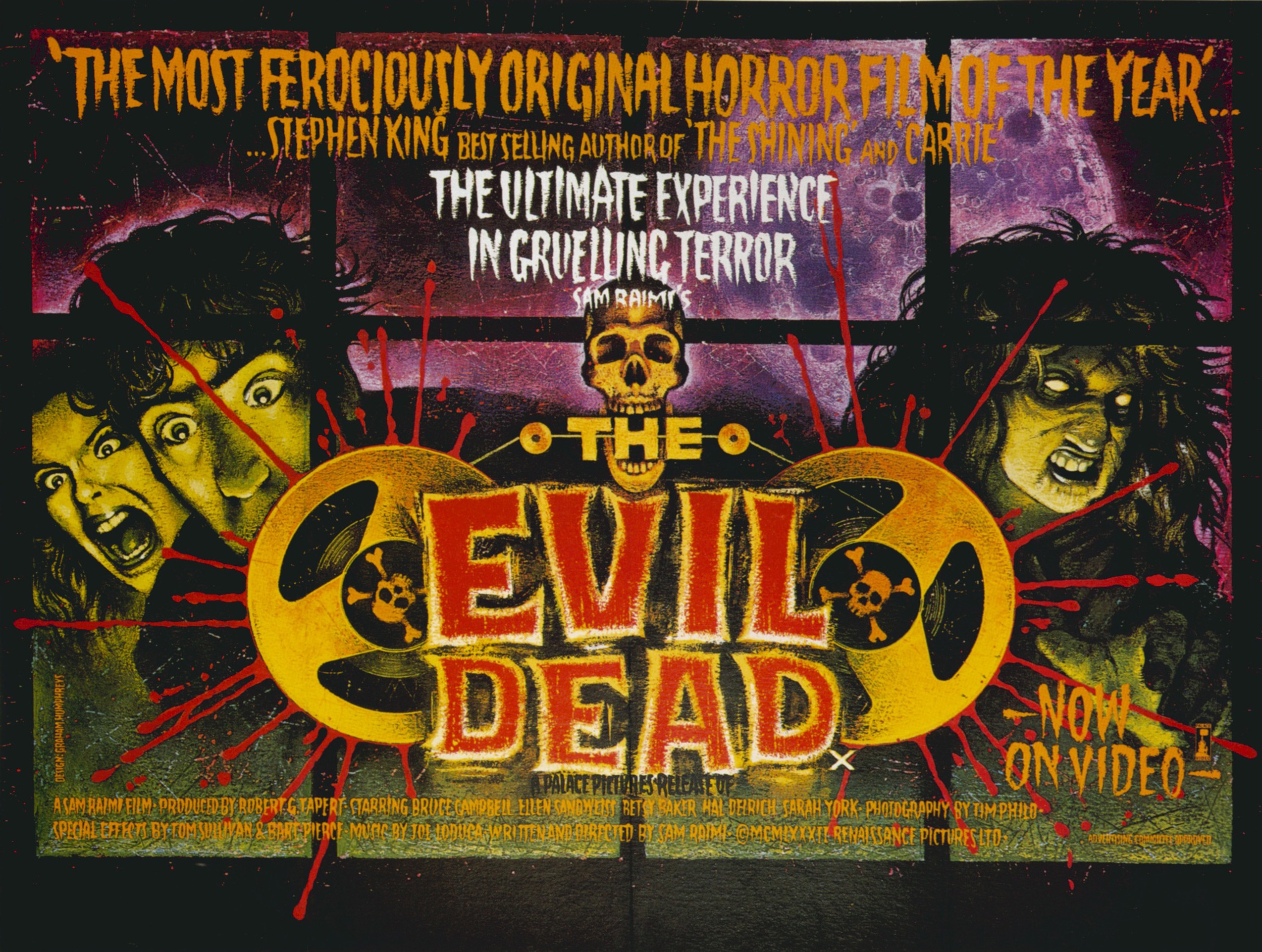
involved scenes of violence with house hold objects. Sam Rami’s ‘The Evil Dead’
was put on trial for a scene of a pencil being inserted into someone’s ankle.
Sam Rami went to court and defended the film, claiming it is fictitious due to
the production hosting evil spirits, rather than using psychotic humans. This
argument managed to sway the court, meaning it wasn’t put on the banned list. Instead the film was released in 1990 with “approximately
2 mins cut” http://en.wikipedia.org/wiki/Video_nasty.
We must make sure that NCTV
stays within the law. For this we must abide by the legislations put into
motion. Such as the Race Relations Act of 1976. This was created to stop the discrimination
of employees because of their race. Obscene Publications Act of 1959 was put into motion to ban the showing
of certain actions or imagery judged as being obscene, on TV and film. An
example of this act in motion is the video nasty list of early 80’s. This
motion, led by Mary Whitehouse, prosecuted films that were deemed by them to be
influencing people to commit murder and other crimes, making such films as ‘Evilspeak’
and ‘The Driller Killer’ banned in the UK. Most of the films put on trial
involved scenes of violence with house hold objects. Sam Rami’s ‘The Evil Dead’
was put on trial for a scene of a pencil being inserted into someone’s ankle.
Sam Rami went to court and defended the film, claiming it is fictitious due to
the production hosting evil spirits, rather than using psychotic humans. This
argument managed to sway the court, meaning it wasn’t put on the banned list. Instead the film was released in 1990 with “approximately
2 mins cut” http://en.wikipedia.org/wiki/Video_nasty.
Another
example of the censoring of shows and movies is the British Board of Film or
BBFC for short. This is a group of people who watch a film and review what
audience the film is suited for. They then put a rating on the film. The
ratings they dish out are…
U: This rating means the film
is suitable for all ages to watch.
PG: A Parental guidance movie
may include none specific/implied sexual dialogue, or violence that is lacking
in blood.
12a/12: These two ratings both mean
the film is ok for 12 year olds and over to watch. Anyone under 12 isn’t
allowed to see the movie at the cinema or purchase on DVD.
15: A 15 may include violence, occasional use of bad language, nudity and sex
is allowed, although not in graphic detail. A 15 rated is only available for
people who are aged 15 and over the watch.
18: Where due to the excessive violence,
language, and or sex. Then the film will be deemed unsuitable for anyone under
the age of 18 to view it.
 CGI has affected the film industry heavily by just
about replacing all practical effects in movies and TV shows. The film that is
responsible for the massive CGI boom is 1993’s Jurassic Park. Originally the
dinosaurs that featured in wide shots were going to be brought to life by Phil
Tippett using stop motion animation. Late into production on the film the
director Steven Spielberg received a call from Dennis Muren, who claimed he
could create realistic animals solely on a computer. Spielberg looked at
several tests of a herd of running dinosaurs and thought it looked so good that
it could replace stop motion techniques. Several pieces of test footage still exist
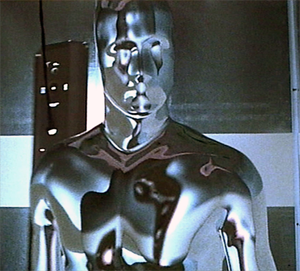
of the stop motion armature dinosaurs. CGI also managed to wow audiences 2
years earlier in the film Terminator 2 Judgement Day with the liquid metal T-1000.
CGI has affected the film industry heavily by just
about replacing all practical effects in movies and TV shows. The film that is
responsible for the massive CGI boom is 1993’s Jurassic Park. Originally the
dinosaurs that featured in wide shots were going to be brought to life by Phil
Tippett using stop motion animation. Late into production on the film the
director Steven Spielberg received a call from Dennis Muren, who claimed he
could create realistic animals solely on a computer. Spielberg looked at
several tests of a herd of running dinosaurs and thought it looked so good that
it could replace stop motion techniques. Several pieces of test footage still exist
of the stop motion armature dinosaurs. CGI also managed to wow audiences 2
years earlier in the film Terminator 2 Judgement Day with the liquid metal T-1000.
 Another massive leap modern cinema has taken is Real 3D. The
film that is responsible for this is James Cameron’s Avatar. The director
claimed that 3D would immerse you in the world of the movie. Although Cameron’s
hit film kicked it off 3D is starting to die out, when 2011’s Pirates of the
Caribbean: On Stranger Tides and Kung Fu Panda 2 both bombed on the 3D market.
In my opinion the film that best used 3D was 2012’s Dredd which had several
scenes of extreme slow-motion. The 3D really stood out as the 3D images were
really slow and gave the viewer a chance to marvel at it rather than normal main stream blockbusters
that usually use 3D to show fast action sequences.
Another massive leap modern cinema has taken is Real 3D. The
film that is responsible for this is James Cameron’s Avatar. The director
claimed that 3D would immerse you in the world of the movie. Although Cameron’s
hit film kicked it off 3D is starting to die out, when 2011’s Pirates of the
Caribbean: On Stranger Tides and Kung Fu Panda 2 both bombed on the 3D market.
In my opinion the film that best used 3D was 2012’s Dredd which had several
scenes of extreme slow-motion. The 3D really stood out as the 3D images were
really slow and gave the viewer a chance to marvel at it rather than normal main stream blockbusters
that usually use 3D to show fast action sequences.