By Adam
Joseph Reed
I am writing this blog as a research document for NCTV to use
as a reference.
Over the course of 2004 to 2012 the analogue switch-off/digital
switchover took place. This was where all analogue television broadcasting was
replaced by digital satellite broadcasting. A benefit of this is digital offers
more channels, so there is a wider choice of what media to watch. A disadvantage is often there is too much choice, which leaves people flicking through channels trying to find something to watch.
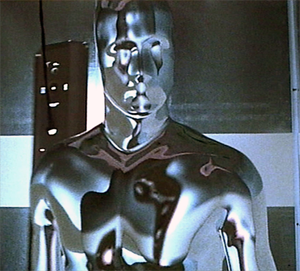
 CGI has affected the film industry heavily by just
about replacing all practical effects in movies and TV shows. The film that is
responsible for the massive CGI boom is 1993’s Jurassic Park. Originally the
dinosaurs that featured in wide shots were going to be brought to life by Phil
Tippett using stop motion animation. Late into production on the film the
director Steven Spielberg received a call from Dennis Muren, who claimed he
could create realistic animals solely on a computer. Spielberg looked at
several tests of a herd of running dinosaurs and thought it looked so good that
it could replace stop motion techniques. Several pieces of test footage still exist
of the stop motion armature dinosaurs. CGI also managed to wow audiences 2
years earlier in the film Terminator 2 Judgement Day with the liquid metal T-1000.
CGI has affected the film industry heavily by just
about replacing all practical effects in movies and TV shows. The film that is
responsible for the massive CGI boom is 1993’s Jurassic Park. Originally the
dinosaurs that featured in wide shots were going to be brought to life by Phil
Tippett using stop motion animation. Late into production on the film the
director Steven Spielberg received a call from Dennis Muren, who claimed he
could create realistic animals solely on a computer. Spielberg looked at
several tests of a herd of running dinosaurs and thought it looked so good that
it could replace stop motion techniques. Several pieces of test footage still exist
of the stop motion armature dinosaurs. CGI also managed to wow audiences 2
years earlier in the film Terminator 2 Judgement Day with the liquid metal T-1000.
 Another massive leap modern cinema has taken is Real 3D. The
film that is responsible for this is James Cameron’s Avatar. The director
claimed that 3D would immerse you in the world of the movie. Although Cameron’s
hit film kicked it off 3D is starting to die out, when 2011’s Pirates of the
Caribbean: On Stranger Tides and Kung Fu Panda 2 both bombed on the 3D market.
In my opinion the film that best used 3D was 2012’s Dredd which had several
scenes of extreme slow-motion. The 3D really stood out as the 3D images were
really slow and gave the viewer a chance to marvel at it rather than normal main stream blockbusters
that usually use 3D to show fast action sequences.
Another massive leap modern cinema has taken is Real 3D. The
film that is responsible for this is James Cameron’s Avatar. The director
claimed that 3D would immerse you in the world of the movie. Although Cameron’s
hit film kicked it off 3D is starting to die out, when 2011’s Pirates of the
Caribbean: On Stranger Tides and Kung Fu Panda 2 both bombed on the 3D market.
In my opinion the film that best used 3D was 2012’s Dredd which had several
scenes of extreme slow-motion. The 3D really stood out as the 3D images were
really slow and gave the viewer a chance to marvel at it rather than normal main stream blockbusters
that usually use 3D to show fast action sequences.
For the production of ‘Star Wars Episode 2: Attack of
the Clones’ in 2002, George Lucas really wanted to shoot his movie on a digital
camera. So he teamed up with Sony and eventually they produced the Sony
HDW-F900. Even with all of Sony’s efforts they were unable to match the picture
quality of analogue film. It wasn’t until 2007 that a digital camera that was
equal in quality to regular film was released in the form of the Red One. Many
films since the Red Ones release have been filmed using digital cameras only.
These include ‘Chronicle’, ‘Dredd’, and ‘Star Wars Episode 3: Revenge of the
Sith’.
